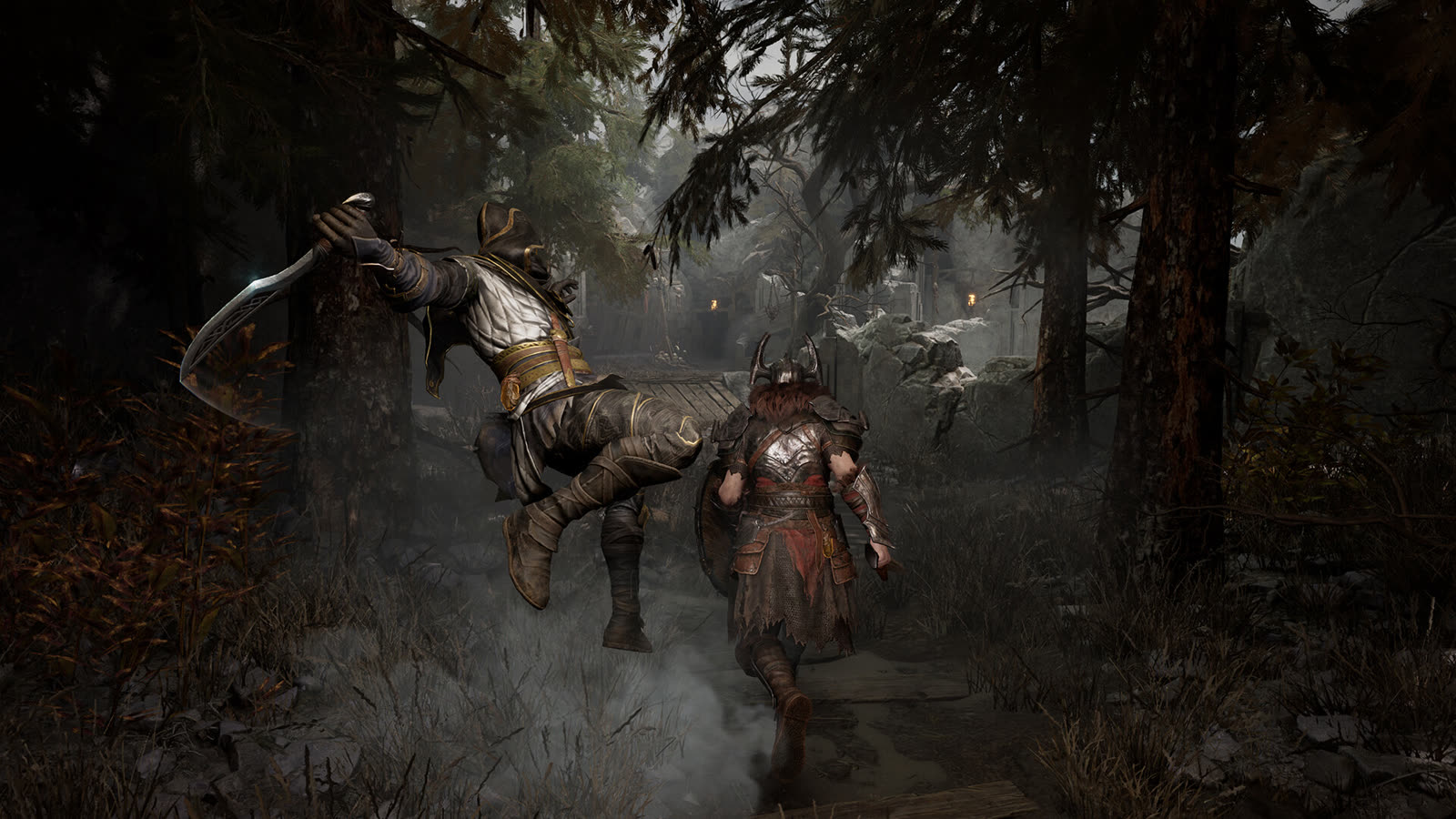
How the two stances divide the work
Sword & Shield gives you active blocking, increased armour, high-impact crowd control through a shield bash, and a gap-closing charge. The Warhammer trades that defensive safety for pure staggering potential through chargeable heavy attacks — and with the right perks those charges can be executed while moving or dodging, which is what stops the stance being a liability.
Why super armour matters more than damage
Super armour prevents your attack from being interrupted partway through. In a game where Breakaway lets opponents escape your combos and where third parties arrive mid-fight, an attack that completes regardless is worth more than an attack that hits harder. This is the mechanical reason the Mercenary is described as exceptionally forgiving rather than simply tanky.
Playing to the class instead of past it
The Mercenary is an engage-and-peel specialist, which in a trio means you start fights on your terms and pull threats off your backline — not that you win duels. Turtle when a fight goes wrong, swap to the hammer when the punish window opens, and accept that against a good Blackarrow your job is closing distance rather than trading.
The Warhammer stun ladder: six stacks, and Hammer Spin pays three
The hammer’s "low damage ceiling" reputation skips what it is actually for. With Titan Hammer Strike, damage you deal accumulates stun stacks on the target, and at six stacks the next attack stuns. That turns the stance from a slow damage option into a stun engine, because one skill pays half the bill by itself.
- Hammer of Convergence raises physical and magic resistance on every charge-type skill, so the same buttons that build stacks also build tankiness.
- Unstoppable is a mirror-match pick: when two super-armour hammers clash it decides who gets stunned, and the worst case is that both do.
- Warhammer Sling is the answer to the kiting weakness — a low-energy ranged option on a class nobody expects to have one.
| Stacks | Cheapest way to get there | What it costs you |
|---|---|---|
| 0 → 3ish | One connecting Hammer Spin | One skill, run under super armour so it can be thrown into a fight already in progress. The tooltip is more precise than the guides: spin hits give 1 stack each and only the final hit gives 2, so a clipped spin banks less than a full one |
| → 6 | Heavy hits and skill hits at 2 stacks each; light hits at 1 | Time on target — this is the half a kiting opponent denies you, and it is why heavy attacks are worth their wind-up here |
| 6 | The next attack stuns, and all stacks are removed | Nothing — but the counter resets, so the ladder is climbed again from zero |
0 → 3ish
- Cheapest way to get there
- One connecting Hammer Spin
- What it costs you
- One skill, run under super armour so it can be thrown into a fight already in progress. The tooltip is more precise than the guides: spin hits give 1 stack each and only the final hit gives 2, so a clipped spin banks less than a full one
→ 6
- Cheapest way to get there
- Heavy hits and skill hits at 2 stacks each; light hits at 1
- What it costs you
- Time on target — this is the half a kiting opponent denies you, and it is why heavy attacks are worth their wind-up here
6
- Cheapest way to get there
- The next attack stuns, and all stacks are removed
- What it costs you
- Nothing — but the counter resets, so the ladder is climbed again from zero
Wrath and Stoic before anything else
The affix priority follows from the playstyle rather than from a tier list. A build that stands in super armour taking hits is going to be below half health regularly, and Wrath and Stoic both pay out there: more damage and more resistance the lower you drop. Max those two before touching anything else. The reason this is worth stating plainly is that the whole build was demonstrated in full green gear and still worked — the stun ladder and the resistance stacking come from talents and skills, not from gear rating, which makes it the cheapest post-launch PvP build any source on this site carries.