Two independent movesets
Shadowstrix runs energy and carries two genuinely separate kits. The dagger gives you Sneak, a baseline stealth move, and the classic assassin opener — sneak in, land a critical from stealth, drop a smoke bomb and melt away. Dual Blades has four basic skills all built around outright offence: spinning slashes and blade dances for when the surprise is spent.
The shared skill pool
On top of each weapon’s core skills you can assign up to two weapon skills per stance from a shared pool — four extra skills total, including short-ranged attacks, utility like the smoke bomb, and finishing melee attacks. This is where the class’s build variety actually lives.
What the CC nerf changed
The launch build deliberately removed the ability to stack stuns on an already-stunned target. Before, a landed opener could chain into an unbreakable sequence. Now the opener has to be followed by real play, which is exactly why the class went from statistically dominant to skill-expressive. If your opener whiffs you are usually dead, so the honest requirement is that you can read fights before you commit.
Shadow Strike is a bait, not an opener
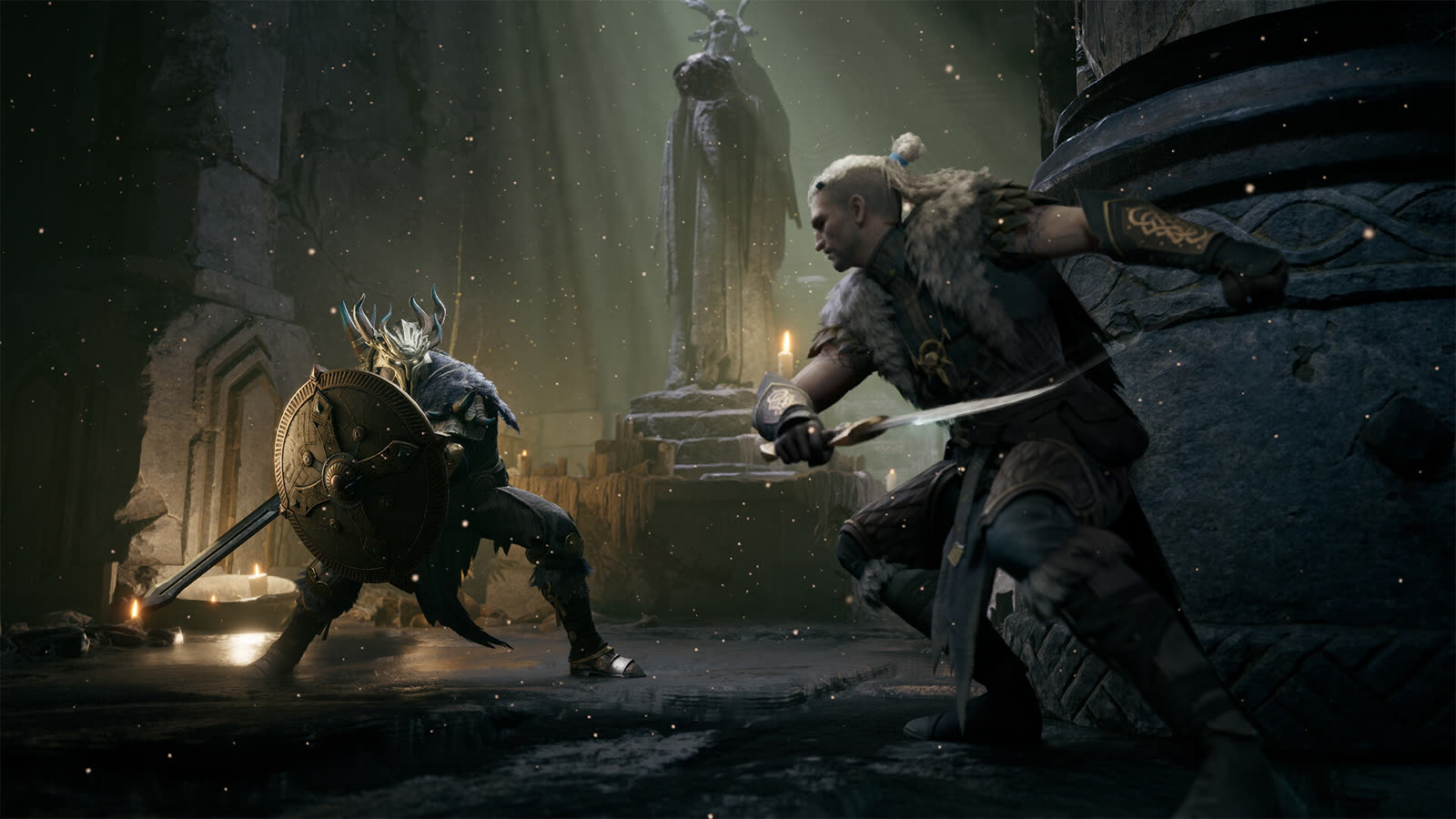
This is the line that separates a Shadowstrix that works from one that feeds, and it inverts how the skill looks on paper. Shadow Strike carries invincibility frames on the cast. So the sequence is not "open with it" — it is walk in, let them swing, i-frame the swing, and recast behind them while they are still locked in their own animation. The stun off that is not a gamble; the opponent has already committed. Lightweight is taken for the same reason, because leaving your animation sooner is what makes the bait repeatable.
- Flash Stride is the ranged version of the same idea: it reaches someone who backed off to drink and locks them in the potion animation.
- Phantom Shift is the solo pick in that slot and Crow Storm the trio pick — and Crow Storm is only worth the slot if both of its talents come with it.
- Spinning Slash is described as non-negotiable on Dual Blades regardless of what else you run.
Fighting one: the same kit, read backwards
Everything above is written for the person playing a Shadowstrix, which is true of every page about this class anywhere — and it leaves the more common question unanswered, because far more players meet one than play one. The finder at the top of this page is that answer. The short version is that three of the class’s best tools are baits that only work if you supply something: Shadow Strike wants your swing, Flash Stride wants your mid-fight potion, and Blade Dance wants your projectiles, which it converts into the energy the class is actually short of. Withhold those three and a Shadowstrix has to open a fight honestly, which is the situation its low health and low defence were balanced around.
- The stealth opener is not unanswerable: the Dagger semi-stealth is re-enterable three times and is readable up close, so closing distance costs it charges while backing away does not.
- The endless stun chains are gone. The launch build stopped stuns stacking on an already-stunned target, so any guide still describing a permanent lock is showing you beta footage.
- The one situation with no trick to it is a straight duel, which the Shadowstrix is simply the best in the game at. The counter to that is arithmetic — it is described as very exposed to three players focusing it.
Energy is the real constraint
Every launch-week Shadowstrix guide ends up talking about energy rather than damage, because the class snowballs on it: the more energy you hold entering a fight, the further a won opening carries. Two talents are load-bearing here. Excitement returns energy on Flash Stride, and on the multi-target build returns it per enemy hit — enough that a cast into a group can pay for itself. Blade Dance is the more surprising one: it amps damage and gives a small step, but it also reflects projectiles and returns energy for each reflection, which turns a ranged opponent into an energy source rather than a problem. Against that, Unstoppable is candidly rated a filler pick — a short window of roughly 5% damage that the guide itself says it does not rate.